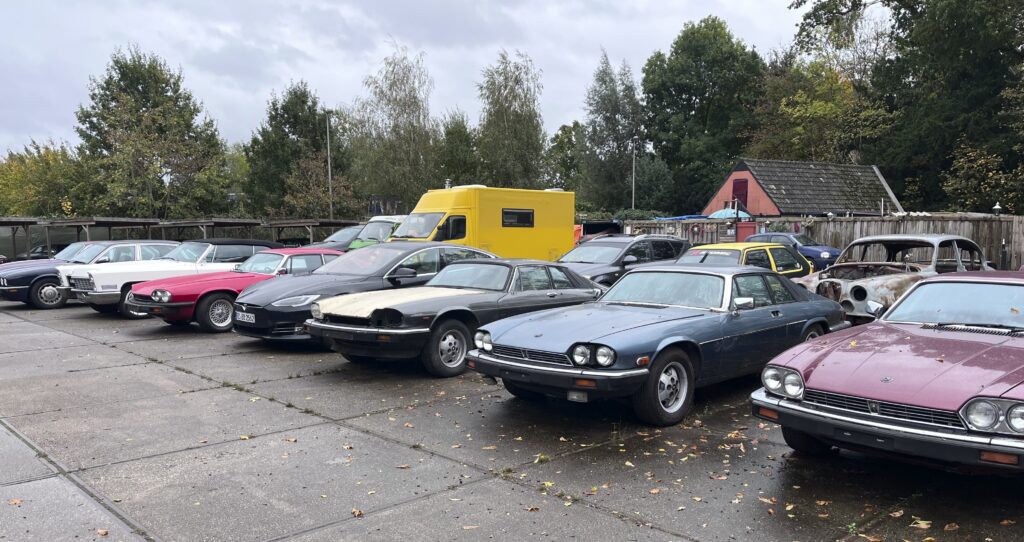
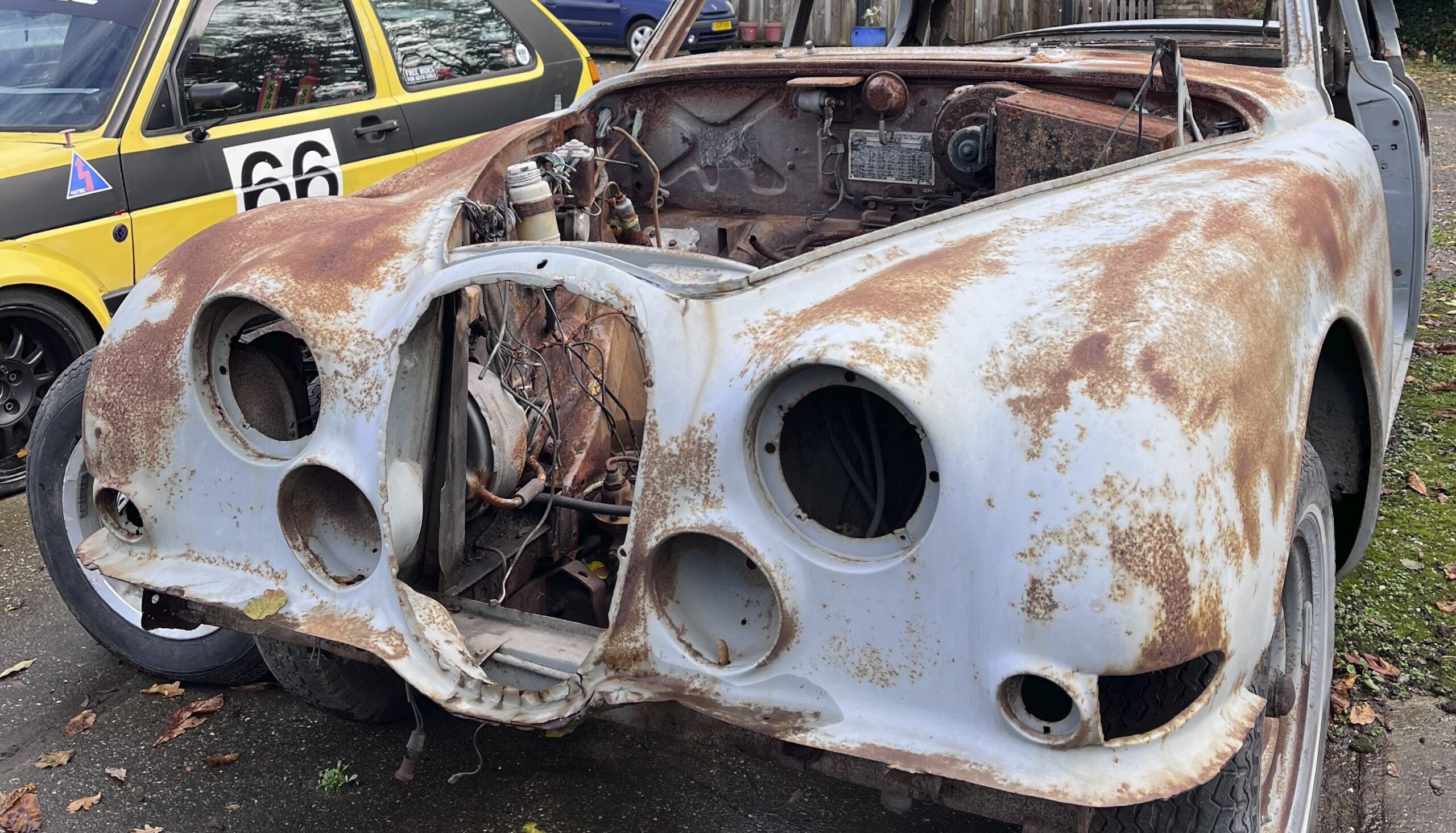
On the same day, I visited Srdjan Jovović‘s company CRS, Classics Restoration Service in Vreeland. Quite a contrast to the clean and tidy workshop I saw in the morning: The outside space was full of wrecks – lots of XJS’s and a rusty empty 1960’s S-Type shell.
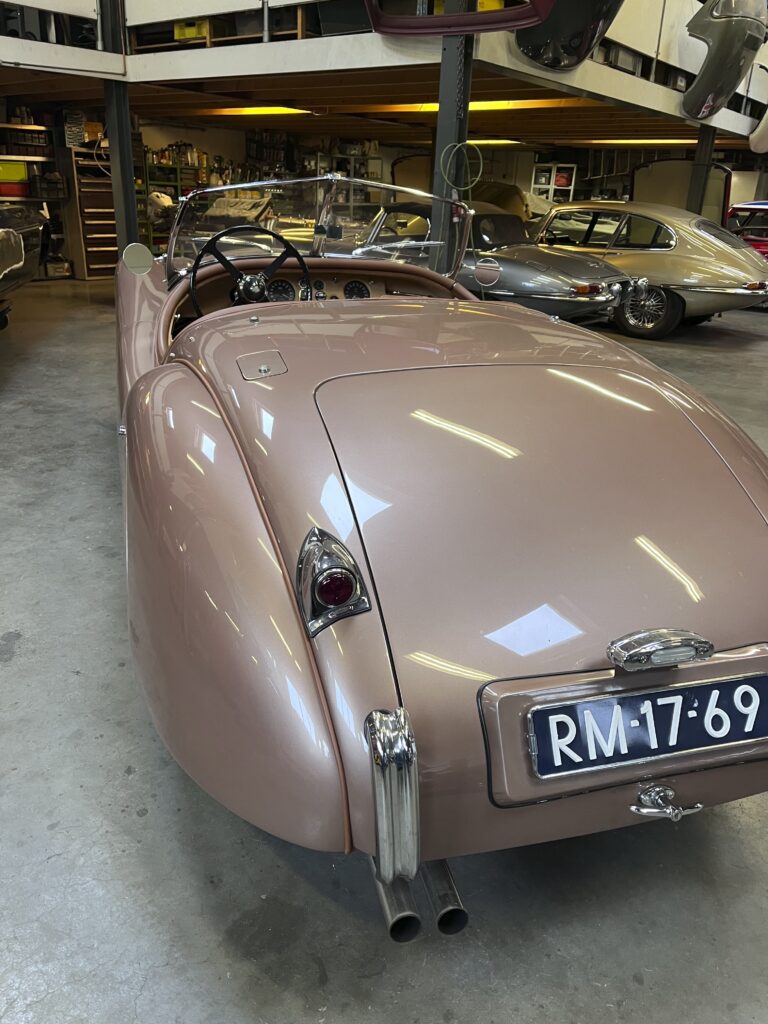
No sign at the door, I just guessed and it was open. A shiny XK140 OTS greeted me, two electric E-Type in the back, an electric XJS next door and an electric Landrover. Srdjan is an electrical engineer by education but has been restoring Classic cars for passion and profession in the past decades. He scaled down from 10 to 2 people as he still loves to work on the cars himself and hates the administrative overhead that comes with a larger company.
We clicked well, and Srdjan shared his experience with the electrifications he has done so far. There is still a lot of experimenting going on: Which BMS to use, which is the best battery module, how well does everything work in a car that is used everyday, at minus 15 and plus 40 degrees Celsius?
After lots of experimenting he settled on LG batteries that VW uses in their ID models, also produced by CATL in China, but he gets them from a company in Hungary. These modules have 6.85 kWh each, are much smaller and easier to fit into a classic car‘s engine bay. He can fit 4 of them even underneath the floor of the Mk2 between the structural elements.
Srdjan (pronounced “Sirjan”, btw) has experience with the Dutch RDW but not the German TÜV. He co-operates with Schilder Electric and the EMUS BMS, an advanced Lithuanian lithium battery management system used by many conversion companies.
Researching further, I found that Schilder Electric has not undergone a TÜV Inspection, yet. I went ahead and contacted one German conversion company that I had abandoned before because of their long waiting list. I wanted to know if they can support the TÜV procedures, but they will only do that if I used their components, which is understandable as the one thing the TÜV needs is documentation. I found out about a few other things during the call, but that is for a future post.
This is the stack of LG 12S 6.85kWh battery modules used by Volkswagen in their MEB electric vehicle platform (VW ID.3, ID.4, ID.5, ID.7, ID-Buzz, Audi Q4 e-tron and Sportback e-tron, Škoda Enyaq and Elroq, Cupra Born and Tavascan, Ford Explorer EV, Ford Capri EV).
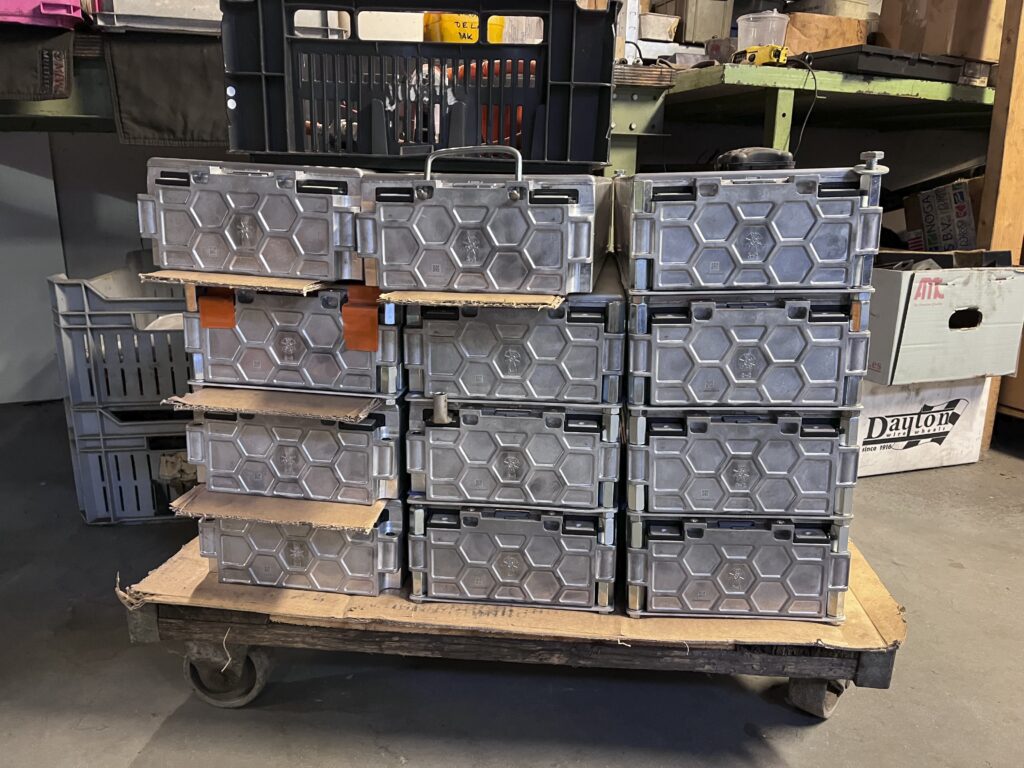
The batteries are available in different voltages to enable a smaller number of cells to reach the high voltage needed.The modules have a good size for a classic engine bay (110 x 225 x 590 mm) and a better gravimetric density as they only put 32 kg on the scale.
Finally, I had a good test drive in an electric Jaguar XJS, that was not converted by Srdjan, but he had in his workshop.
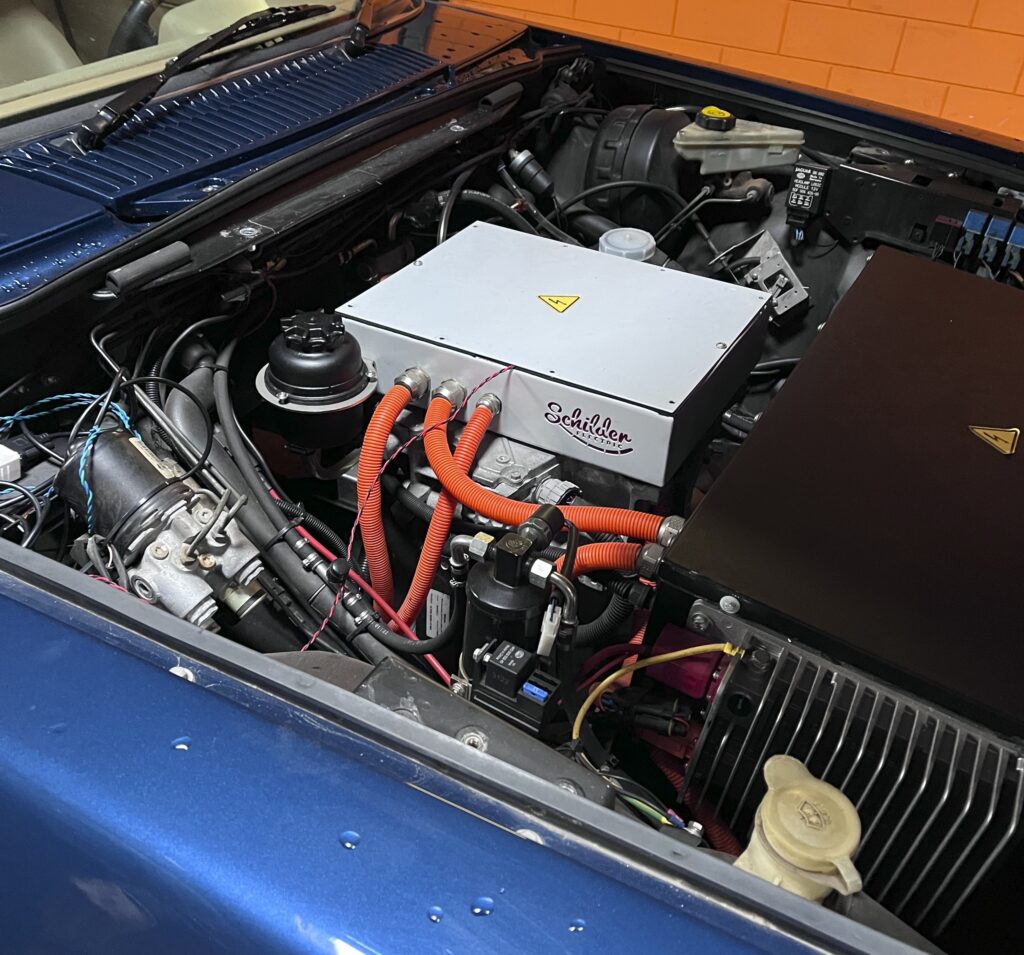
A few things did not appeal to me that much: The Schilder metal housing with the BMS and microcontroller, 2 fuses and wiring did not look very professional. And the so-called Potbox, 2 potentiometers, connecting to the pedal, adjusting the power of the engine. It just did not look like automotive quality.
I fully realised, how much I still am very much at the lower end of the learning curve
Leave a Reply